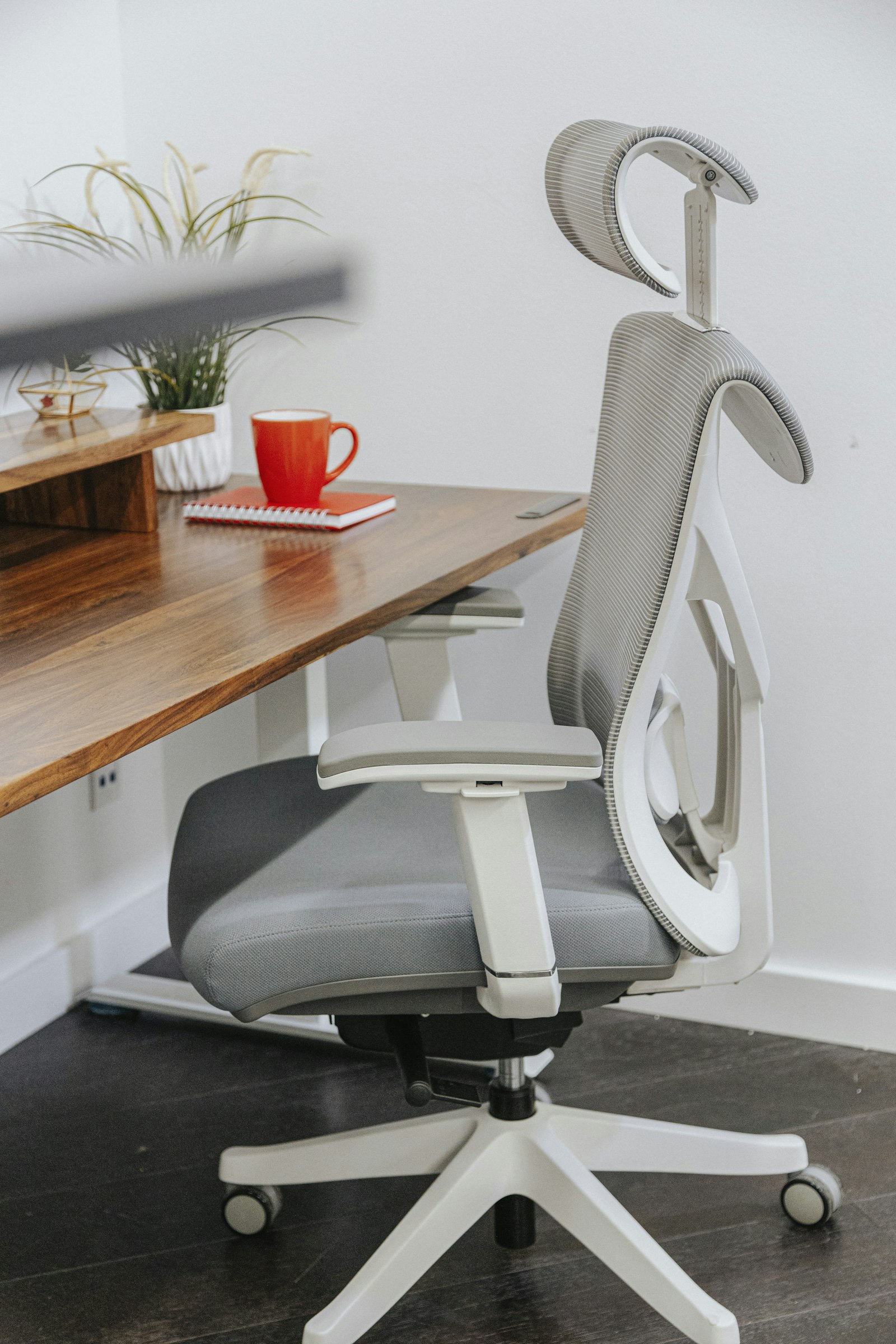
Best Home Office Chair 2026: Ergonomic Picks for All-Day Comfort
Quick Picks — Best Home Office Chairs 2026
Steelcase Leap V2
The most adaptable ergonomic chair available — 22 points of adjustment, LiveBack technology, and proven 8-hour comfort for remote workers at any body type.
~$1,149
Branch Ergonomic Chair
27 points of adjustment, lumbar support, and seat depth control in a chair that competes with options three times its price — the best ergonomic chair under $400.
~$329
Hbada Ergonomic Office Chair
Adjustable lumbar support, headrest, and 3D armrests in a sub-$200 package — the best ergonomic home office chair for budget-conscious setups.
~$189
As an Amazon Associate we earn from qualifying purchases.
The chair you sit in for 8 hours a day is the most impactful investment in your home office. A proper ergonomic chair reduces lower back pain, improves posture, and keeps you comfortable through long work sessions — a bad one does the opposite, accumulating damage over months and years. After evaluating lumbar support systems, seat depth adjustment, armrest range, build quality, and long-term durability across dozens of options, these are the best home office chairs for 2026. Every pick below has meaningful lumbar support, adjustable seat height and depth, and the adjustability to fit a wide range of body types and desk heights.
The right home office chair depends on three factors: how long you sit daily, your body dimensions, and your budget. For people sitting 6+ hours per day, the investment in a proper ergonomic chair pays for itself in reduced pain and medical costs over even a single year. Browse all ergonomic home office chairs on Amazon if you want to compare beyond our top picks.
The 5 Best Home Office Chairs in 2026
Steelcase Leap V2 — Best Ergonomic Chair for Home Office
The Steelcase Leap V2 is the standard against which all other home office chairs are measured. It’s been the top recommendation from ergonomists, physical therapists, and long-term remote workers for over a decade, and for good reason — it adapts to the way you actually move while sitting rather than forcing you into a fixed position.
The key technology is LiveBack, a flex mechanism that tracks and supports natural spine movement as you shift, lean, and recline throughout the day. Unlike fixed lumbar inserts that support one spine position, the Leap V2 supports your back across its full range of motion. Lower back firmness adjustment lets you tune the lumbar support intensity to your preference. The seat edge adjusts to keep circulation to your legs regardless of how you sit, and the seat depth accommodates leg lengths from 15 to 21 inches.
Armrest adjustability is exceptional — 4D armrests adjust for height, width, pivot angle, and forward/backward position, meaning the armrests can be positioned to support your forearms in exactly the position your desk requires. For people who have struggled to find a chair that eliminates shoulder and neck tension, proper armrest positioning makes a significant difference.
The Leap V2 holds its value well in the used market if you ever need to resell, and Steelcase’s 12-year warranty covers all components. This is the chair to buy if you’re sitting 6+ hours per day and want to make the investment once rather than replacing budget chairs every few years.
PROS
- LiveBack technology — supports spine through full range of motion, not just one position
- 4D armrests with exceptional range — eliminates shoulder and neck tension
- Seat depth adjustment accommodates a wide range of leg lengths
- 12-year warranty — the longest in the category at this price
- Holds resale value well — certified refurbished units widely available at half price
CONS
- High upfront cost — significant investment for home office use
- No headrest option — taller users working long hours may miss neck support
- Requires adjustment time — full benefit requires tuning all 22 adjustment points
Specs: Weight capacity: 400 lbs | Seat depth: 15–21″ | Armrests: 4D | Warranty: 12 years | Available in multiple fabric/color options
Branch Ergonomic Chair — Best Home Office Chair Under $400
The Branch Ergonomic Chair makes the features of a $1,000+ chair accessible at $329. It includes 27 points of adjustment — more than most chairs twice its price — including seat depth, lumbar height and depth, armrest height and pivot, seat height, and recline tension. For people who have used budget chairs with limited adjustability, the difference when every parameter fits your body is immediately noticeable.
The lumbar support is the standout feature relative to price. It adjusts both vertically (to match your lumbar curve position) and in depth (how far it protrudes), meaning you can dial in support that actually fits your lower back rather than a generic position. The seat cushion uses a high-density foam that maintains shape through years of use — a common failure point on budget chairs that use cheaper foam that compresses quickly.
The Branch ships direct from Branch (not currently available on Amazon, but listed here for reference), though Amazon carries comparable options in the same price range. Build quality is noticeably better than chairs at similar Amazon price points, with an aluminum base rather than plastic and smooth pneumatic height adjustment. For home office workers who want meaningful ergonomic support without approaching $1,000, this is the value leader in 2026.
PROS
- 27 adjustment points — seat depth, lumbar height/depth, 3D armrests, recline tension
- Adjustable lumbar in two axes — fits a wider range of lumbar curve positions
- High-density foam seat cushion — maintains shape longer than budget alternatives
- Aluminum base — more durable than plastic bases common at this price point
- Best ergonomic feature set under $400
CONS
- Not available on Amazon — requires ordering direct from Branch
- Headrest is an add-on, not included at base price
- Seat width may feel narrow for larger body types
SIHOO Doro C300 — Best Mid-Range Home Office Chair
The SIHOO Doro C300 is the strongest mid-range option on Amazon in 2026. At $399, it delivers a mesh back, 4D armrests, adjustable lumbar, headrest, and seat depth control — the full complement of adjustments for a remote work setup. The anti-gravity tilt mechanism provides smooth recline with adjustable tension, and the headrest adjusts both height and angle to support different head and neck positions.
The mesh back allows airflow that keeps you cooler during long sessions — an advantage over foam-backed chairs in warm climates or rooms without air conditioning. Build quality is solid for the price, with a sturdy nylon base and smooth casters that roll well on both hard floors and carpet.
PROS
- Full adjustment set at mid-range price — lumbar, headrest, 4D arms, seat depth
- Mesh back — better airflow than foam-backed alternatives
- Adjustable headrest — useful for people who prefer neck support
- Available on Amazon with Prime shipping
CONS
- Lumbar adjustment range narrower than the Branch at similar price
- Armrest cushions softer than premium options — may compress over time
FlexiSpot OC14 — Best Ergonomic Chair Under $300
The FlexiSpot OC14 is the best option for home office workers who want genuine ergonomic adjustability under $300 without resorting to bare-bones budget options. It includes adjustable lumbar support, 3D armrests, seat depth control, and a breathable mesh back. The tilt lock mechanism allows you to fix the chair in a specific recline angle — useful for people who prefer a slightly reclined working position.
FlexiSpot’s build quality is consistent with their standing desk reputation — the OC14 feels more substantial than its price suggests. The seat cushion depth is adequate for most users, and the lumbar support provides a meaningful difference compared to chairs without it. For a budget-conscious home office setup where the chair isn’t the primary investment, this is a solid choice that won’t cause the back problems that no-name budget chairs often create within months.
PROS
- Genuine ergonomic adjustability under $300
- 3D armrests + seat depth + adjustable lumbar in the same chair
- Mesh back with consistent FlexiSpot build quality
- Tilt lock for fixed recline positions
CONS
- Lumbar adjustment is less precise than the Branch or Steelcase
- Weight capacity lower than premium options — 250 lbs
Hbada Ergonomic Office Chair — Best Budget Home Office Chair
The Hbada Ergonomic Office Chair delivers the core ergonomic features — adjustable lumbar support, adjustable headrest, 3D armrests, and breathable mesh — at a price that makes ergonomic seating accessible for any home office budget. At under $200, compromises exist, but they’re in the right places: the adjustment range is narrower than premium options, but the lumbar support is real and adjustable, which is the most important feature for preventing lower back pain.
The mesh back keeps airflow consistent. Headrest height and angle adjusts to support different postures. The reclining mechanism allows a moderate range of tilt. For people equipping a home office on a strict budget, or as a secondary chair for a guest workspace, the Hbada provides meaningful improvement over standard office chairs without ergonomic features.
PROS
- Real adjustable lumbar support — the most important feature at any price
- Adjustable headrest and 3D armrests included
- Mesh back for airflow
- Best ergonomic features under $200
CONS
- Narrower adjustment range than mid-range options — may not fit all body types
- Seat foam will compress faster than higher-end alternatives
- Plastic base rather than aluminum
Home Office Chair Comparison
| Chair | Price | Lumbar | Armrests | Seat Depth | Warranty | Best For |
|---|---|---|---|---|---|---|
| Steelcase Leap V2 | ~$1,149 | Dynamic LiveBack | 4D | Yes | 12 years | Best overall |
| Branch Ergonomic | ~$329 | Height + depth adj. | 3D | Yes | 5 years | Best value |
| SIHOO Doro C300 | ~$399 | Adjustable | 4D | Yes | 3 years | Mid-range Amazon |
| FlexiSpot OC14 | ~$249 | Adjustable | 3D | Yes | 2 years | Under $300 |
| Hbada Ergonomic | ~$189 | Adjustable | 3D | No | 1 year | Budget pick |
What to Look for in a Home Office Chair
Lumbar Support: The Most Important Feature
Lumbar support is the single most important ergonomic feature in a home office chair. The lumbar spine has a natural inward curve, and sitting for extended periods without support for that curve causes the muscles supporting it to fatigue, leading to lower back pain. An adjustable lumbar support — one that can be moved up or down to match your specific lumbar curve position — is significantly more effective than a fixed insert.
At a minimum, look for a chair where the lumbar position can be adjusted vertically. Better chairs also adjust lumbar depth (how far the support protrudes). The best chairs, like the Steelcase Leap V2, use dynamic systems that move with your spine rather than fixing it in a single supported position.
Seat Depth Adjustment
Seat depth is the second most important and most commonly overlooked adjustment. If the seat is too deep, the front edge cuts into the back of your knees, reducing circulation to your lower legs. If it’s too shallow, your thighs aren’t fully supported. The correct seat depth leaves two to three finger widths between the front edge of the seat and the back of your knees. A chair with seat depth adjustment accommodates different leg lengths — critical for anyone shorter or taller than average.
Armrests: 2D vs 3D vs 4D
Armrests matter more than most people realize. Improperly positioned armrests that are too high or too low cause shoulder elevation or slumping, both of which lead to neck and shoulder tension over time. Height-adjustable (2D) armrests are the minimum. 3D armrests add pivot angle adjustment. 4D armrests add forward/backward positioning. For most home office setups, 3D or 4D armrests allow the armrests to be positioned under your forearms in the exact position your keyboard and desk require.
Mesh vs Foam Back
Mesh backs allow airflow that keeps you cooler during long work sessions — a meaningful comfort factor in summer or in rooms without air conditioning. The trade-off is that mesh provides less direct tactile feedback about posture than a firm foam back. For pure ergonomic support, foam-backed chairs like the Steelcase Leap V2 can be superior, though high-quality mesh like that in the SIHOO Doro C300 is competitive. If you run warm or work in a warm room, mesh is worth prioritizing.
Should You Buy New or Refurbished?
Premium ergonomic chairs like the Steelcase Leap V2 and Herman Miller Aeron hold up exceptionally well over time and have robust resale and refurbishment markets. Certified refurbished units from reputable dealers often sell for 40-60% of retail price and carry meaningful warranties. If $1,000+ for a new chair is prohibitive, certified refurbished is a legitimate path to a premium chair at value-tier pricing. Avoid uncertified used units where wear patterns and mechanism condition are unknown.
Frequently Asked Questions
Is an expensive ergonomic chair worth it for home office use?
For people sitting 6+ hours per day, yes. The cost of a premium ergonomic chair amortized over its 10-12 year lifespan works out to less per day than a cup of coffee, and the reduction in back pain, physiotherapy costs, and lost productivity from discomfort is measurable. The Steelcase Leap V2 at $1,149 is a better long-term investment than replacing a $200 chair every two years. That said, the Branch Ergonomic Chair at $329 captures 80% of the ergonomic benefit at 30% of the premium price for people whose budget doesn’t extend to the premium tier.
What lumbar support position should I use?
Position the lumbar support to fill the gap between your lower back and the chair back when you’re sitting upright with your hips fully back in the seat. The support should rest against your lumbar spine (the inward curve of your lower back, roughly at belt level) without pushing your back forward. If your chair has depth adjustment as well, start with minimal depth and increase it until you can feel the support without feeling forced forward.
How high should a home office chair be?
Set chair height so that your feet rest flat on the floor with your knees at approximately 90 degrees. Your thighs should be approximately horizontal — not angled steeply up or down. If your desk is at a fixed height and this chair height positions your forearms above desk level, lower the desk or add a keyboard tray rather than raising the chair height past the point where your feet are flat on the floor.
Are mesh office chairs better than foam for home office use?
Mesh chairs are better for temperature regulation — they allow airflow that prevents heat buildup during long sessions. High-density foam chairs can provide superior lumbar support and more direct feedback about posture, and the best foam-backed chairs (like the Steelcase Leap V2) outperform most mesh options on ergonomics. For most home offices in temperate climates, mesh is the practical choice in the mid-range; at the premium tier, foam-back and mesh options are both excellent.
Can I use a gaming chair for home office work?
Gaming chairs can be used for home office work, but most are not optimized for 8-hour ergonomic support. The bucket seat design common in gaming chairs tilts the pelvis backward, which increases lumbar strain over long periods compared to a flat seat pan. The prominent shoulder wings can restrict natural arm movement. Some higher-end gaming chairs include adequate lumbar support and adjustability, but at equivalent price points, purpose-built ergonomic office chairs are consistently better for all-day work.
Our Final Verdict
If budget is not the primary constraint, the Steelcase Leap V2 is the best home office chair available in 2026. Its LiveBack technology, 4D armrests, and seat depth adjustment deliver genuine all-day comfort that prevents the back pain accumulation that cheaper chairs cause over months of daily use. It’s the one home office investment that pays for itself in reduced discomfort and maintained productivity.
For most remote workers balancing ergonomics and budget, the SIHOO Doro C300 at $399 on Amazon delivers a complete adjustment set — 4D armrests, adjustable lumbar, headrest, and seat depth — at a price that makes real ergonomic support accessible without a premium spend. Under $200, the Hbada Ergonomic Chair is the minimum viable ergonomic option that actually supports your lower back.
Get the Steelcase Leap V2 on Amazon
See the SIHOO Doro C300 on Amazon
As an Amazon Associate we earn from qualifying purchases.